Greatest Mirrorless Cameras 2026: Picks for Each Price range and Model

I am Laurence, knowledgeable journey photographer since 2010. Jess and I write this web site from our personal travels.
I’ve been knowledgeable journey photographer since 2010, and each lens in my digicam bag was purchased for a DSLR. As of late all of them go on a Canon EOS R5 via Canon’s EF to RF adapter. So when somebody asks me which mirrorless digicam to purchase, my first query again is normally which lenses they already personal.
I don’t personal any of the cameras on this listing. Mine is the unique R5, the digicam the R5 Mark II succeeded.
What I’ve performed is take photographs since 1993 and educate images via my on-line course, which is numerous time spent studying which options make a distinction when you’re out taking pictures and which of them solely look good on a spec sheet. I checked the specs right here in opposition to the digicam makers’ personal spec pages and launch bulletins in November 2026, and the place I personal the gear (the R5, the EF lenses, the adapter), I’ll let you know.
For those who’re shopping for primarily for journey, my journey digicam information is the higher place to start out. I’ve additionally received guides to the very best compact cameras and the best DSLR cameras in case you’re not set on mirrorless.
Fast Verdict: Which Mirrorless Digicam Ought to You Purchase?
For those who’re ranging from scratch, my choose for most individuals is the Fujifilm X-T5. You get a 40.2MP APS-C sensor, in-body stabilisation rated at 7 stops, a weather-resistant physique and bodily dials for the principle settings, in a digicam that weighs 557g with its battery and card.
If you would like full-frame, get the Canon EOS R6 Mark III, which does all the things effectively. The Nikon Z5 II is the cheaper method into full-frame, and the Nikon Z6 III and Sony a7 V are the equivalents in case you already personal Nikon or Sony lenses. For those who personal Canon DSLR lenses, they’ll work on any of the Canon our bodies right here via Canon’s EF-EOS R adapter.
New to images, or on a smaller finances? Get the Canon EOS R10, or the R50 or R100 if you should spend much less. For video, the Canon EOS R6 V data 7K RAW and has a built-in cooling fan, but it surely has no viewfinder in any respect, so learn its part earlier than you order one.
My journey digicam information picks the Sony a6700 as an alternative of the X-T5, as a result of journey images rewards quick autofocus above virtually all the things else, and that’s the place the a6700 is strongest. As a digicam to personal and use for all the things, the X-T5 is the higher purchase.
Fast Picks: The Greatest Mirrorless Cameras in 2026
In a rush? Listed below are my picks for various wants and budgets:
- Greatest general: Fujifilm X-T5. A 40.2MP sensor, bodily dials for all the things and a weather-resistant physique.
- Greatest for inexperienced persons: Canon EOS R10. Simple to study on, with sufficient controls that you just gained’t outgrow it in a 12 months.
- Greatest worth full-frame: Nikon Z5 II. Full-frame, a sealed physique and two card slots for lots lower than the all-rounders.
- Greatest full-frame all-rounder: Canon EOS R6 Mark III. A 32.5MP sensor and stabilisation rated as much as 8.5 stops.
- Greatest compact full-frame: Sony a7C II. A 33MP full-frame sensor in a physique lighter than the X-T5.
- Greatest fanatic full-frame: Nikon Z6 III. {A partially}-stacked sensor and 6K inner RAW video.
- Greatest Sony full-frame all-rounder: Sony a7 V. A 33MP sensor and bursts of as much as 30fps.
- Greatest for video: Canon EOS R6 V. 7K RAW at 60p and a cooling fan, with no viewfinder.
- Greatest for wildlife and motion: Canon EOS R7. Bursts of as much as 30fps and a 1.6x crop that stretches your telephoto lenses.
- Greatest Sony APS-C: Sony a6700. Glorious autofocus in a small, mild physique.
- Greatest high-resolution: Sony a7R VI. 66.8MP, Sony’s highest-resolution Alpha digicam.
- Greatest high-end: Canon EOS R5 Mark II. A 45MP stacked sensor, and the digicam I’d substitute my R5 with.
- Greatest for vlogging: Fujifilm X-M5. The lightest interchangeable-lens digicam in Fujifilm’s X Collection.
- Greatest rangefinder-style: Fujifilm X-E5. The X-T5’s sensor in a flat-topped physique, and the primary X-E digicam with in-body stabilisation.
Greatest Mirrorless Cameras In contrast
Right here’s how the 14 picks examine. Costs replace dwell from Amazon and are for the physique solely, besides the Canon R10 and Nikon Z5 II, which Amazon sells with a package lens. Weights are for the physique with its battery and reminiscence card (no lens), taken from every maker’s personal spec pages.
The best way to Select: Choose the System Earlier than the Digicam

You’ll most likely substitute your digicam physique in a number of years. The lenses can stick with you for lots longer than that, and so they solely match one maker’s mount. So the larger determination is the system you’re shopping for into, and the physique comes second.
I’ve been a Canon consumer since I used to be 13, and that’s the way it’s labored out for me. Once I moved from the Canon 6D to the R5, I didn’t have to interchange a single lens. It price me an adapter slightly than a brand new bag of glass, which is in regards to the least expensive improve a photographer ever will get to make.
Which Mounts Are Open to Different Lens Makers?
Third-party lenses from the likes of Sigma, Tamron and Viltrox are sometimes cheaper than the digicam maker’s personal, and a few fill gaps within the vary. What number of you may select from relies upon quite a bit on the mount:
- Sony E-mount is essentially the most open of the massive methods. Sony launched its specs to different lens makers royalty-free again in 2011, and it has the widest selection of third-party full-frame autofocus lenses. Some Sony our bodies do restrict burst velocity with some third-party lenses.
- Fujifilm opened its X-mount to 3rd events in 2020, and now you can purchase autofocus X lenses from Sigma, Tamron, Viltrox, Tokina and Zeiss.
- Nikon’s Z-mount is partly open. Tamron, Laowa and Viltrox make full-frame autofocus lenses for it, whereas Sigma’s Z lenses are APS-C solely.
- Canon’s RF mount is essentially the most restricted for full-frame. Sigma and Tamron have offered Canon-licensed autofocus RF lenses since April 2024, however virtually all of them are APS-C (RF-S) lenses, and the full-frame third-party choices are usually handbook focus. For those who’re shopping for a full-frame Canon, finances for Canon’s personal lenses.
- The L-mount was arrange as an alliance by Leica, Panasonic and Sigma in 2018, and different members have joined since. For those who purchase a Panasonic Lumix S physique, Sigma’s L-mount lenses match it natively, with no adapter.
In apply, it means a newbie shopping for a Canon APS-C physique just like the R10 has loads of inexpensive lens choices, whereas somebody shopping for a Canon full-frame physique is usually paying Canon costs for glass.
What a First Package Prices Past the Physique
The value on the field is rarely the value of the package. Earlier than you choose a physique, add up what you’ll really must exit and shoot:
- A lens. The package lens is okay to start out with, however the subsequent lens you purchase (normally a quick prime or a telephoto zoom) can simply price as a lot as an entry-level physique. Our information to the very best lenses for journey images covers what to purchase subsequent.
- A spare battery. Mirrorless cameras run their display or digital viewfinder the entire time they’re on, in order that they get via batteries sooner than DSLRs, and even sooner within the chilly (my chilly climate images ideas cowl that). Carry no less than one spare.
- The suitable reminiscence card. Test which card kind the physique takes before you purchase, as a result of some higher-end cameras want CFexpress playing cards, which price much more than SD playing cards.
If the overall is over your finances, drop a tier on the physique earlier than you skimp on the lens.
Already Personal DSLR Lenses?
Then the model determination has most likely been made for you. All three of the massive DSLR makers promote an adapter that lets your previous lenses work on their mirrorless our bodies:
- Canon’s EF-EOS R mount adapter lets EF and EF-S lenses work on Canon’s RF our bodies, and Canon says there’s no lack of autofocus velocity or picture stabilisation. It’s how each lens I personal goes on my R5, and it’s dust- and waterproof too. It’s Check price on Amazon on Amazon, and Canon additionally makes a model with a management ring.
- Nikon’s FTZ II adapter places F-mount lenses on Z our bodies. You get full autofocus with AF-S, AF-P and AF-I lenses, whereas older screw-drive AF-D lenses turn out to be handbook focus.
- Sony’s LA-EA5 adapts A-mount lenses to E-mount our bodies, however autofocus with older screw-drive lenses solely works on some current Sony our bodies, so examine Sony’s compatibility list for yours earlier than you depend on it.
For those who’ve received a superb set of DSLR lenses, the adapter is the most cost effective a part of switching to mirrorless. Our DSLR newbie’s information continues to be price a learn in case you’re sticking with the digicam you’ve for now.
Attempt a System Earlier than You Purchase It
For those who’re torn between two methods, simply hire one for a weekend first. Lens Rentals will ship you a physique and lens to attempt, and some days of actual taking pictures tells you extra about whether or not a digicam fits your palms than any quantity of studying. It’s additionally a wise approach to attempt an costly lens you’re undecided about.
Simply purchased a digicam, or about to? I am going to allow you to get it prepared to your first journey.
5 quick emails over ten days, from me: the settings to alter out of the field, preserving it powered and secure on the street, a take a look at shoot earlier than you fly, and backing up your photographs whilst you journey.
You will additionally get my month-to-month publication. Unsubscribe any time.
The Greatest Mirrorless Cameras in 2026
Listed below are my picks in full, roughly from the cameras most individuals ought to take a look at to the extra specialist ones. In case your finances is tight, take a look at shopping for used too. There’s extra on that additional down, and our information to purchasing used cameras and kit goes into the element.
Greatest Total: Fujifilm X-T5
The Fujifilm X-T5 is the mirrorless digicam I like to recommend to most individuals. It will get the steadiness between picture high quality, measurement and bodily controls nearer than the rest on this listing.
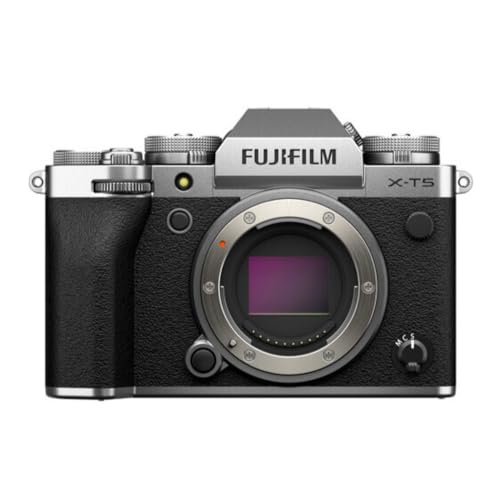
The 40.2MP X-Trans sensor provides you information you may crop onerous or print huge, and Fujifilm’s movie simulations offer you film-style color straight out of the digicam. You additionally get in-body stabilisation rated at 7 stops, and Fujifilm has put 56 weather-sealed factors into the physique, which it charges to work all the way down to -10°C.
Then there are the dials. Shutter velocity, ISO and publicity compensation all have their very own dial on high of the digicam, so you may see your settings at a look, even with the digicam switched off. It’s a good way to study what every setting does, and naturally it appears to be like the half too.
The place it falls behind is velocity and video. The 15fps mechanical burst is fairly fast and high quality for many issues, however not for quick motion, and whereas it shoots 6.2K video, the X-T5 is a stills digicam first. If video is your precedence, take a look at the R6 V or the Panasonic S5 II beneath.
Execs: high-resolution sensor, 7-stop stabilisation, weather-resistant physique, a dial for each principal setting.
Cons: video is an afterthought in contrast with the hybrids right here, not quick sufficient for severe motion, and 40MP information fill playing cards and drives rapidly.
Key specs
- Sensor: 40.2MP APS-C X-Trans CMOS 5 HR
- Stabilisation: 5-axis in-body, as much as 7 stops
- Weight: 557g with battery and card
- Climate resistance: 56 sealed factors, rated to -10°C
- Mount: Fujifilm X
Greatest for: photographers who need one digicam that does most issues effectively, with dials for the principle settings.
Greatest for Newbies: Canon EOS R10
The Canon EOS R10 is the digicam I’d purchase somebody who’s studying images. It’s easy sufficient to start out on, and it has sufficient controls that they gained’t outgrow it in a 12 months.

Canon’s newbie our bodies work as a ladder:
- The Canon EOS R100 (24.1MP) is the most cost effective method into Canon’s RF system. It’s a superbly good digicam to study the fundamentals on, but it surely misses a number of issues the R50 has, together with a touchscreen. Additionally on B&H.
- The Canon EOS R50 (24.2MP, 375g with battery and card) is the only of the three to make use of, with a touchscreen and an interface constructed for individuals stepping up from a telephone. Additionally on B&H. (Don’t confuse it with the R50 V, which is a separate, video-focused digicam.)
- The R10 (24.2MP, 429g with battery and card) provides a much bigger grip and extra bodily controls, that are the stuff you begin to need when you’ve moved off auto.
I’d go straight to the R10 in case your finances stretches that far. It’s additionally the newbie digicam I like to recommend in my information to utilizing a mirrorless digicam, so in case you purchase one, that information will stroll you thru the controls.
Canon doesn’t declare climate sealing for any of the three, and the R10 has no in-body stabilisation, so that you’re counting on the stabiliser within the package lens. On the plus aspect, the third-party autofocus lenses Canon has licensed for RF are virtually all APS-C lenses, so the R10 will get the cheaper lens selection that full-frame Canon house owners don’t.
For those who’d slightly be in Nikon’s system, the Nikon Z50 II is the equal. It has a 20.9MP sensor, weighs 550g with battery and card, and just like the R10 it has no in-body stabilisation, so it depends on stabilised lenses. Additionally on B&H.
Execs: simple to study, extra controls than the R50 and R100, mild, loads of inexpensive APS-C lenses.
Cons: no in-body stabilisation, and Canon doesn’t declare any climate sealing.
Key specs
- Sensor: 24.2MP APS-C
- Stabilisation: none within the physique (use a stabilised lens)
- Weight: 429g with battery and card
- Mount: Canon RF (takes RF-S and RF lenses, plus EF lenses on the adapter)
Greatest for: inexperienced persons stepping up from a telephone who need a digicam they will develop into.
Greatest Worth Full-Body: Nikon Z5 II
The Nikon Z5 II is my worth choose for full-frame. It’s quite a bit cheaper than the all-rounders beneath, and also you hand over lower than the value suggests.

You get a 24.5MP full-frame sensor, 5-axis in-body stabilisation rated as much as 7.5 stops, and a magnesium-alloy physique that Nikon says is sealed in opposition to mud and moisture. It additionally has two SD card slots, so you may write each picture to 2 playing cards directly. That’s the setup I’d need for something you may’t reshoot, like a marriage or a once-in-a-lifetime journey.
Amazon sells it as a package with Nikon’s 24-50mm lens, and B&H has the physique by itself. Nikon additionally sells the Z5IIC, which it says has the identical efficiency in a flat-topped physique with no viewfinder and one SD slot, for about $200 much less at listing value. I’d pay the additional for the Z5 II’s viewfinder, particularly in case you shoot in vibrant solar, the place a rear display will get onerous to see.
Canon shooters ought to take a look at the Canon EOS R8 Mark II as an alternative. Canon calls it the lightest EOS with in-body picture stabilisation, at 546g with battery and card, and it has a 24.2MP sensor with stabilisation rated at 7.5 stops. It was introduced in September 2026, and it retains you in Canon’s RF system. Additionally on B&H.
Execs: full-frame for a lot much less, sealed physique, two card slots, robust stabilisation.
Cons: fewer third-party full-frame lenses than Sony (Sigma’s Z lenses are APS-C solely), and heavier than the APS-C picks.
Key specs
- Sensor: 24.5MP full-frame
- Stabilisation: 5-axis in-body, as much as 7.5 stops
- Weight: 700g with battery and card
- Card slots: two SD
- Mount: Nikon Z
Greatest for: anybody who needs full-frame picture high quality with out paying for a top-tier physique.
Greatest Full-Body All-Rounder: Canon EOS R6 Mark III
If you would like one full-frame digicam that does just about all the things effectively, purchase the Canon EOS R6 Mark III. It’s additionally one of many two cameras I’d take into account if I had been changing my R5 at the moment (it wasn’t out after I purchased mine).
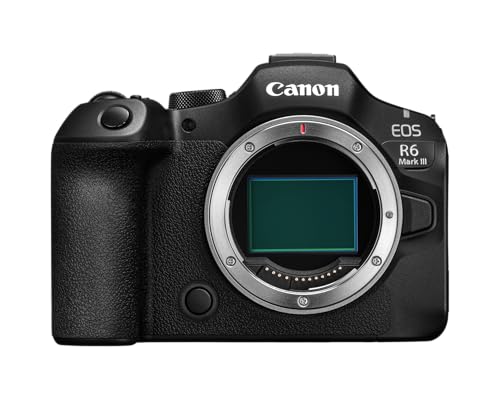
The 32.5MP sensor provides you a bit extra room to crop than the Z6 III’s 24.5MP, and Canon charges the in-body stabilisation at as much as 8.5 stops within the centre of the body. It shoots bursts of as much as 40fps with the digital shutter and data 7K video, and Canon has added dust- and waterproof gasketing across the battery compartment and card slot.
Canon sells it aspect by aspect with the R6 V additional down, which is the video-first model, with no viewfinder and no mechanical shutter. The R6 Mark III retains each, so for stills, or a mixture of stills and video, purchase this one.
For those who already personal Nikon lenses, the Z6 III is the equal digicam. Ranging from nothing, I’d choose the R6 Mark III for its higher-resolution sensor. Simply do not forget that Canon’s full-frame RF mount has only a few third-party autofocus lenses, so that you’ll principally be shopping for Canon’s personal.
Execs: 32.5MP sensor, very robust stabilisation, viewfinder and mechanical shutter (not like the R6 V).
Cons: Canon’s personal lenses are the principle selection for it, and it’s heavier than the APS-C choices.
Key specs
- Sensor: 32.5MP full-frame
- Stabilisation: in-body, as much as 8.5 stops (centre)
- Weight: 699g with battery and card
- Climate resistance: gasketing on the battery compartment and card slot
- Mount: Canon RF
Greatest for: photographers who need one full-frame physique for all the things, now and for years.
Greatest Compact Full-Body: Sony a7C II
The Sony a7C II places a 33MP full-frame sensor right into a physique that weighs 514g with its battery and card. That’s lower than the X-T5, and it’s the lightest full-frame digicam on this listing.
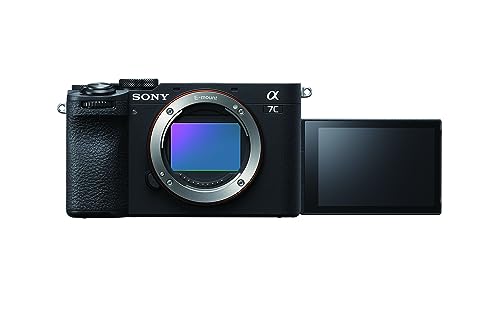
It has sensor-shift stabilisation within the physique, Sony’s excellent subject-tracking autofocus, and entry to the E-mount, which has the widest selection of third-party full-frame lenses of any system. Pair it with a small prime and also you’ve received a full-frame digicam you may carry all day with out noticing.
The compromises are within the dealing with. The viewfinder is small, and there’s no autofocus joystick, so shifting your focus level takes longer than on the larger Sony our bodies. For those who can, maintain one in a store before you purchase.
Execs: full-frame in a small, mild physique, dependable autofocus, big lens selection.
Cons: small viewfinder, no autofocus joystick.
Key specs
- Sensor: 33MP full-frame
- Stabilisation: in-body, sensor-shift
- Weight: 514g with battery and card
- Mount: Sony E
Greatest for: photographers who need full-frame high quality within the smallest attainable physique.
Greatest Fanatic Full-Body: Nikon Z6 III
Already in Nikon’s system and need one physique to do all the things? Get the Nikon Z6 III.

It makes use of a 24.5MP partially-stacked sensor, which Nikon says reads out about 3.5 occasions sooner than the standard sensor within the Z6 II. That velocity is behind its quick digital shutter and fast bursts. Nikon charges the in-body stabilisation at as much as 8 stops, it data 6K/60p RAW video internally, and Nikon says the physique has the identical stage of mud and drip resistance as its skilled Z8, rated to work all the way down to -10°C.
For those who personal Nikon F-mount lenses, the FTZ II adapter places them on the Z6 III with full autofocus, so long as they’re AF-S, AF-P or AF-I lenses. Older screw-drive lenses work in handbook focus solely.
At 760g with battery and card, it’s the heaviest digicam on this listing, so look elsewhere if weight is your principal concern.
Execs: quick partially-stacked sensor, 8-stop stabilisation, inner 6K RAW, Z8-level sealing.
Cons: the heaviest physique right here, and fewer third-party full-frame lenses than Sony.
Key specs
- Sensor: 24.5MP full-frame, partially stacked
- Stabilisation: in-body, as much as 8 stops
- Weight: 760g with battery and card
- Video: 6K/60p inner RAW
- Mount: Nikon Z
Greatest for: Nikon shooters who need a do-everything full-frame physique.
Greatest Sony Full-Body All-Rounder: Sony a7 V
Sony calls the a7 V an all-around full-frame digicam. It sits beneath the Alpha 1 II, Sony’s flagship, and above the smaller a7C II.
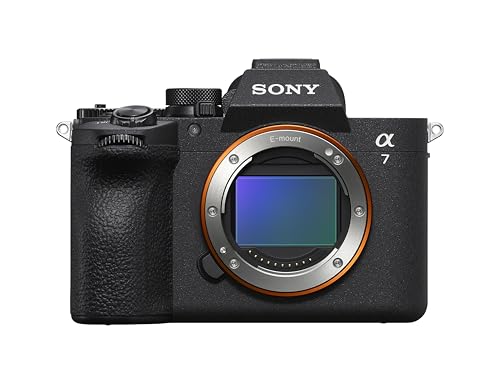
It has a 33MP sensor, in-body stabilisation and Sony’s AI-based topic recognition, and it shoots bursts of as much as 30fps. Sony says the physique is designed with mud and drip resistance in thoughts, and likewise says it gained’t utterly maintain mud and water out.
The selection between this and the a7C II is usually about dealing with. The a7 V is heavier at 695g, but it surely has the larger grip and extra of the bodily controls you’ll use each day. For those who don’t want the smallest Sony, simply get the a7 V.
Execs: quick, reliable autofocus, fast bursts, higher dealing with than the a7C II, essentially the most open lens mount.
Cons: heavier and pricier than the a7C II.
Key specs
- Sensor: 33MP full-frame
- Stabilisation: in-body, sensor-shift
- Weight: 695g with battery and card
- Mount: Sony E
Greatest for: Sony shooters who need one full-frame physique for all the things.
Greatest for Video: Canon EOS R6 V
If video is the principle purpose you’re shopping for, begin with the Canon EOS R6 V. Canon calls it a video-centric digicam.

It data 7K RAW at 60p from a 32.5MP full-frame sensor, and a built-in cooling fan retains it occurring lengthy takes. Canon quotes as much as 120 minutes of steady 7K 60p RAW Gentle or uncropped 4K 60p recording (measured at 23°C from a chilly begin), so in regular circumstances overheating shouldn’t minimize an extended take quick. For takes that lengthy you’ll need exterior energy, as Canon charges a single battery at about 70 minutes of 4K 60p. Stabilisation is rated at 7.5 stops within the centre.
There’s no digital viewfinder, although, so that you compose on the rear display. There’s no mechanical shutter both, solely an digital one (as much as 1/16000s), and Canon itself warns that fast-moving topics can present rolling-shutter distortion.
Canon says flash assist with the digital shutter is coming in a future firmware replace. For stills, purchase the R6 Mark III as an alternative. The R6 V doesn’t substitute it, and Canon sells the 2 aspect by aspect.
If you would like one digicam that does video and stills effectively, the Panasonic Lumix S5 II is the higher hybrid. It has a viewfinder, and Panasonic says it data limitless 4K (C4K and 4K at as much as 60p, so long as you’re between 0 and 40°C). It makes use of the L-mount, so Sigma’s lenses are an choice too. I’d solely select the R6 V over the S5 II if video clearly comes first for you.
Execs: 7K RAW, lengthy recording occasions with the fan, robust stabilisation.
Cons: no viewfinder, no mechanical shutter, and never a digicam I’d purchase for stills.
Key specs
- Sensor: 32.5MP full-frame
- Stabilisation: in-body, 7.5 stops (centre)
- Weight: 688g with battery and one card
- Video: 7K/60p RAW, built-in cooling fan
- Viewfinder: none
- Mount: Canon RF
Greatest for: video-first shooters and content material creators who need lengthy recording occasions.
Greatest for Wildlife and Motion: Canon EOS R7
The Canon EOS R7 is my choose for wildlife on a finances. It’s Canon’s high APS-C physique, and for wildlife the smaller sensor works in your favour.

On my R5, the EF 100-400mm is my wildlife lens. Put the identical lens on an R7 and the 1.6x crop makes it body like a 160-640mm, so distant animals fill fairly much more of the body with out you shopping for an extended lens. It additionally takes EF lenses via the identical adapter I exploit, which makes it a pure second physique for anybody with Canon DSLR glass.
It shoots 15fps with the mechanical shutter and as much as 30fps with the digital one, Canon charges the stabilisation at as much as 7 stops, and Canon describes the physique as mud and moisture resistant, a declare it doesn’t make for the R10.
It’s been round since 2022, and as of November 2026, Canon hasn’t introduced a successor.
Execs: further attain from the crop sensor, quick bursts, sealed physique, works with EF lenses on the adapter.
Cons: an older design than most of this listing, and APS-C struggles greater than full-frame in low mild at daybreak and nightfall.
Key specs
- Sensor: 32.5MP APS-C
- Stabilisation: in-body, as much as 7 stops
- Weight: 612g with battery and card
- Burst: 15fps mechanical, 30fps digital
- Mount: Canon RF
Greatest for: wildlife, birds and sport, on a finances.
Greatest Sony APS-C: Sony a6700
The Sony a6700 is my favorite of Sony’s APS-C cameras, principally for its autofocus. That’s additionally why it tops my journey digicam information.
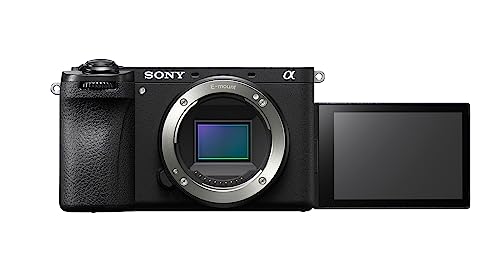
You get a 26MP sensor, sensor-shift stabilisation and Sony’s subject-tracking autofocus in a physique that weighs 493g with battery and card. Sony’s E-mount additionally provides you extra lens selection than every other APS-C system, together with inexpensive choices from Sigma and Tamron.
The principle draw back is Sony’s menu system. It’s improved through the years, but it surely’s nonetheless a bit more durable to seek out your method round than Canon’s or Fujifilm’s. For those who’re the kind of one that units a digicam up as soon as and leaves it, that gained’t trouble you a lot.
Execs: quick, dependable autofocus, small and light-weight, numerous lens selection.
Cons: fiddly menus, fewer bodily controls than the X-T5.
Key specs
- Sensor: 26MP APS-C
- Stabilisation: in-body, sensor-shift
- Weight: 493g with battery and card
- Mount: Sony E
Greatest for: anybody who shoots shifting topics and desires a small digicam.
Greatest Excessive-Decision: Sony a7R VI
The Sony a7R VI has a 66.8MP sensor. That makes it Sony’s highest-resolution Alpha physique and, as of November 2026, the highest-resolution full-frame digicam on sale.
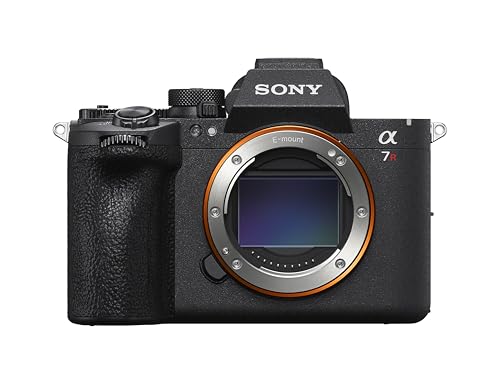
You may crop a wildlife shot onerous, make very massive prints, or shoot a panorama understanding there’s element to spare. It has in-body stabilisation and weighs 713g with battery and card, which isn’t rather more than the a7 V.
Most individuals don’t want 66.8MP, and the information want quick playing cards and loads of cupboard space. For those who print huge, crop closely or promote your work, it’s price it. In any other case, the a7 V or the a7C II will serve you higher for much less cash and smaller information.
Execs: a 66.8MP sensor, and nonetheless pretty mild for what it’s.
Cons: costly, and the massive information want quick playing cards and plenty of storage.
Key specs
- Sensor: 66.8MP full-frame
- Stabilisation: in-body, sensor-shift
- Weight: 713g with battery and card
- Mount: Sony E
Greatest for: panorama and fine-art photographers, and anybody who prints massive or crops quite a bit.
Greatest Excessive-Finish: Canon EOS R5 Mark II
The Canon EOS R5 Mark II is the successor to my R5, and if I had been shopping for at the moment, it’s most definitely the digicam I’d purchase, just because it’s going to get firmware assist for a bit longer.

Canon’s flagship is the EOS R1, however for nearly anybody who doesn’t shoot sport for a dwelling, the R5 Mark II is the high-end Canon I’d advocate. The 45MP back-illuminated stacked sensor provides you loads of decision and quick readout, Canon charges the stabilisation at as much as 8.5 stops within the centre, and the physique is dust- and weather-resistant to the identical commonplace as the unique R5.
It’s additionally the digicam my journey digicam information picks for when cash is not any object. For most individuals it’s extra digicam than they want, and the R6 Mark III does many of the identical jobs for lots much less. However in case you shoot professionally, otherwise you need one physique to cowl landscapes and wildlife for years, it’s definitely worth the cash.
Execs: 45MP stacked sensor, 8.5-stop stabilisation, sealed physique, takes EF lenses on the adapter.
Cons: costly, and overkill for most individuals.
Key specs
- Sensor: 45MP full-frame, back-illuminated stacked
- Stabilisation: in-body, as much as 8.5 stops (centre)
- Weight: 670g with battery and card
- Climate resistance: identical as the unique R5
- Mount: Canon RF
Greatest for: professionals and severe lovers who need the very best Canon wanting the flagship.
Greatest for Vlogging: Fujifilm X-M5
Get the Fujifilm X-M5 if video and social content material are as vital to you as stills. At 355g with battery and card, it’s the lightest interchangeable-lens digicam in Fujifilm’s X Collection.

It has a 26.1MP X-Trans sensor with Fujifilm’s movie simulations, shoots open-gate 6.2K video, and has a vertical video mode for clips of as much as 60 seconds, so you may movie for social media with out turning the digicam on its aspect.
It provides up rather a lot to be that small. There’s no in-body stabilisation (solely digital stabilisation, and just for video), and Fujifilm doesn’t declare any climate sealing. Pair it with a stabilised lens or a small gimbal in case you’re filming handheld. For stills, the X-T5 or X-E5 are the higher Fujifilm cameras.
Execs: very mild, Fujifilm color, a superb video function set for the cash.
Cons: no in-body stabilisation, no climate sealing claimed.
Key specs
- Sensor: 26.1MP APS-C X-Trans CMOS 4
- Stabilisation: digital, video solely
- Weight: 355g with battery and card
- Mount: Fujifilm X
Greatest for: vloggers and content material creators who need Fujifilm’s color in a lightweight physique.
Greatest Rangefinder-Type APS-C: Fujifilm X-E5
The Fujifilm X-E5 provides you the X-T5’s picture high quality in a smaller, flat-topped physique styled like a basic rangefinder.
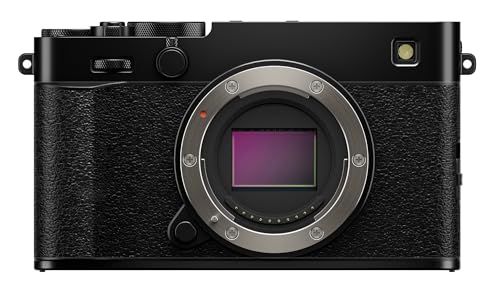
It makes use of the identical 40.2MP X-Trans CMOS 5 HR sensor because the X-T5, and it’s the primary X-E digicam with in-body stabilisation, rated at 7 stops within the centre of the body and 6 on the edges. It weighs 445g with battery and card, which is mild for that sensor, and it pairs properly with Fujifilm’s small primes.
The X-E5 is about model as a lot as specs, and there’s nothing improper with that. A digicam you take pleasure in utilizing is a digicam you’re taking out extra! For those who shoot numerous fast-moving topics, although, the a6700 is the higher instrument.
Execs: the X-T5’s sensor in a smaller physique, in-body stabilisation, basic styling.
Cons: a smaller grip than the X-T5, and never constructed for quick motion.
Key specs
- Sensor: 40.2MP APS-C X-Trans CMOS 5 HR
- Stabilisation: in-body, 7 stops (centre), 6 (edges)
- Weight: 445g with battery and card
- Mount: Fujifilm X
Greatest for: road and on a regular basis photographers who need basic appears to be like and Fujifilm’s color.
Purchase Present or Final Era?

The fact is that almost all high-end cameras nowadays do all the things most photographers want. I solely ever improve when a brand new digicam may give me one thing that’s going to make a major enchancment to my images.
Shifting from the 6D to the R5 was that sort of step. The burst price, the autofocus and the general efficiency had been all a extremely huge leap. Going from the R5 to the R5 Mark II wouldn’t be something like as huge a distinction. Once I purchased the R5 it was the newest mannequin, and I count on it to remain my principal digicam for years to come back (assuming I don’t break it).
So my recommendation is to ask what the newer mannequin would do for you that the older one can’t. If the reply is “not a lot”, purchase the older one, or purchase it used and put the financial savings right into a lens. On a finances, or as a second physique, the unique R5 continues to be a remarkably good digicam.
For those who do go used, purchase from a seller that inspects and grades what it sells, like MPB, and never from a stranger on-line. Our information to purchasing used cameras covers what to examine earlier than you hand over any cash.
What I Shoot With
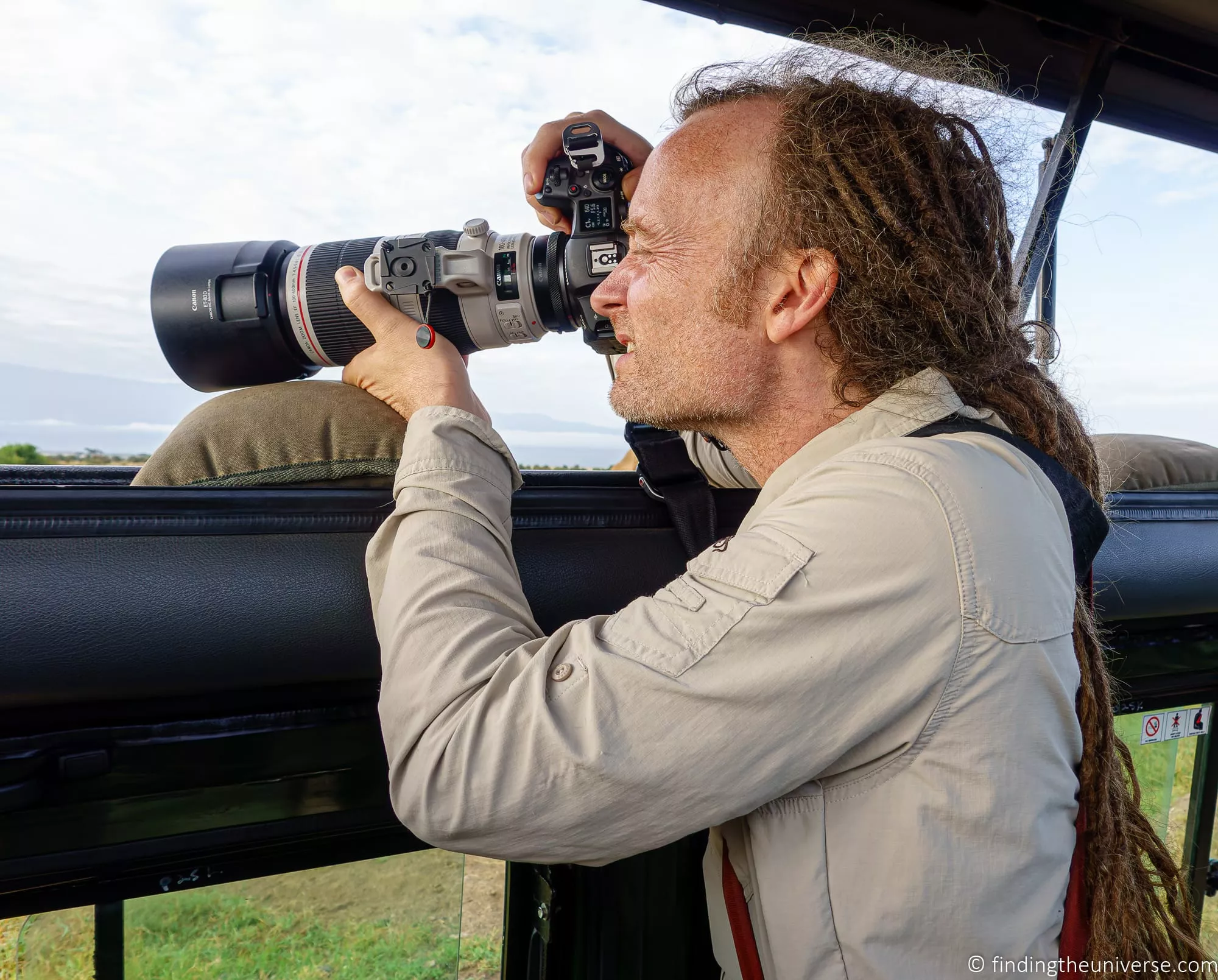
Individuals usually ask what’s in my bag, so right here it’s. My principal digicam is a Canon EOS R5, and each lens I personal is a Canon EF lens, used on the R5 via the EF-EOS R adapter. I don’t personal a single RF lens. Those I exploit most are the EF 100-400mm f/4.5-5.6L IS II for wildlife, the EF 16-35mm f/4L for vast landscapes and interiors, and the EF 70-200mm f/2.8L.
I additionally nonetheless have two Canon 6D our bodies. On safari, one in all them comes together with the 16-35mm on it whereas the R5 has the 100-400mm, so I’m not swapping lenses in a dusty automobile. For days after I don’t wish to carry any of that, I’ve received a Sony RX100 V that matches in a pocket (it’s in my compact digicam information).
You may see the total listing, luggage and tripods included, in my journey images package, and my Canon R5 overview goes into the R5 in much more element.
What I’ve Discovered Since Going Skilled
These are the issues I’d inform any pal who requested me about shopping for a digicam.
Lenses Outlast Our bodies
Cameras enhance each couple of years, however a superb lens will outlast a number of our bodies in case you take care of it. Spend a bit much less on the physique and a bit extra on the glass, as a result of the lens goes with you to the following digicam and the physique doesn’t.

That picture was taken with an EF lens, made for DSLRs, on a mirrorless physique.
Learn the Small Print on Climate Sealing
Each digicam maker phrases its sealing claims rigorously. Nikon’s personal web page for the Z5IIC says that full dust- and drip-resistant efficiency is “not assured in all conditions or beneath all circumstances”. Sony says a lot the identical in regards to the a7 V.
So sealing will assist when the climate turns, however I wouldn’t stand out in a downpour and depend on it. It’s price paying for in case you shoot close to the ocean, within the mountains or anyplace humid. In correct rain, an affordable rain cowl nonetheless is sensible, sealed digicam or not.
The Greatest Digicam Is the One You’ll Carry
A heavy full-frame package that stays within the resort room as a result of it’s an excessive amount of to lug round takes fewer good photographs than a lightweight APS-C package that’s at all times in your bag. Before you purchase, weigh the entire package you’d really carry, with the lenses on the size too.
Switching Methods Prices Extra Than You Count on
Altering manufacturers means changing lenses, studying new menus and altering how you’re employed, and that not often pays off until the brand new system does one thing particular you want. For those who already personal Canon or Nikon lenses, the adapter route above is sort of at all times the higher transfer.
Wish to Take Higher Journey Pictures?
Choosing the right digicam is step one. Realizing the right way to get essentially the most out of it’s the subsequent one, and that is what my online travel photography course is for. It begins with how your digicam works, then strikes on to composition, mild and enhancing, and I offer you suggestions in your photographs as you go.
I have been educating it since 2016, over 2,500 college students have taken it, and it is a single cost for lifetime entry.
Simply purchased a digicam? I’ll send you five free emails on getting it prepared to your first journey.
Often Requested Questions About Mirrorless Cameras
What’s the greatest mirrorless digicam in 2026?
For most individuals, it’s the Fujifilm X-T5. Its 40.2MP APS-C sensor, 7-stop stabilisation and weather-resistant physique make it the very best all-rounder for the cash, and its dials present your principal settings at a look.
If you would like full-frame, my choose is the Canon EOS R6 Mark III, with the Nikon Z5 II because the cheaper method in. For those who already personal lenses for one system, purchase the very best physique in that system you may afford.
What model makes the very best mirrorless digicam?
For those who already personal lenses, they need to resolve it for you. Ranging from nothing, every of the massive 4 has a transparent power.
Sony has essentially the most third-party lens selection, as a result of its E-mount is essentially the most open. Fujifilm fits you in case you like bodily dials and film-style color straight out of the digicam. Canon’s menus are the best to study, however its full-frame mount has only a few third-party autofocus lenses. Nikon is robust on worth, particularly with the Z5 II.
What’s the distinction between a mirrorless digicam and a DSLR?
A DSLR makes use of a mirror to bounce mild up into an optical viewfinder. A mirrorless digicam has no mirror, so that you see the picture on an digital viewfinder or the rear display as an alternative, precisely because the sensor sees it. That makes mirrorless our bodies smaller, and it means you may see your publicity earlier than you’re taking the picture.
Each take interchangeable lenses and offer you full handbook management. New improvement has moved virtually totally to mirrorless, although. Canon has stated its future flagship cameras will likely be mirrorless solely, and Nikon hasn’t launched a brand new DSLR for the reason that D6 in 2020.
Do skilled photographers use mirrorless cameras?
Sure, and I’m one in all them. My principal digicam is a Canon EOS R5, though I nonetheless use my 6D as a second physique, and a DSLR that works continues to be a superbly good digicam.
The digicam makers are all heading the identical method. Canon has stated its future flagships will likely be mirrorless solely. Nikon nonetheless makes, sells and companies DSLRs, but it surely hasn’t launched a brand new one for the reason that D6 in 2020. Sony stopped promoting its final A-mount SLR-style our bodies in 2021 and now solely makes mirrorless cameras.
Is a mirrorless digicam price shopping for in 2026?
Sure, if you’d like greater than your telephone may give you. Which means a a lot bigger sensor, lenses you may change, full handbook management, and RAW information you may edit in picture enhancing software program.
For those who’re pleased along with your telephone’s photographs and don’t wish to study any settings, a telephone or a compact digicam will most likely swimsuit you higher.
Is full-frame the identical as mirrorless?
No. Mirrorless describes how the digicam is constructed (with no mirror inside), and full-frame describes the sensor measurement (the identical measurement as a 35mm movie body). You should buy a full-frame mirrorless digicam just like the Canon EOS R6 Mark III, an APS-C mirrorless digicam just like the Fujifilm X-T5, and DSLRs in each sizes too.
So that you’re actually making two separate selections, in regards to the sensor measurement you want and the system you wish to purchase into.
Is APS-C or full-frame higher?
For most individuals, APS-C is lots. It’s lighter and cheaper, and cameras just like the X-T5 and R7 are greater than able to professional-quality photos.
Full-frame is healthier in low mild and offers you extra background blur on the identical aperture, and it’s what I shoot. For those who shoot quite a bit indoors, at night time or at occasions, otherwise you need very shallow depth of discipline for portraits, full-frame is price the additional measurement and price.
What’s the greatest finances mirrorless digicam for inexperienced persons?
The Canon EOS R100 is the most cost effective method into a serious digicam system, and the R50 provides a touchscreen and a better interface. My choose is the R10, which prices a bit extra however has the additional controls you’ll need when you’ve moved off auto, so that you gained’t outgrow it as rapidly.
For Nikon, the Z50 II is the equal. When you’ve received your digicam, my newbie’s information to utilizing a mirrorless digicam and my information to images composition are good subsequent steps.
What’s the greatest inexpensive full-frame mirrorless digicam?
The Nikon Z5 II. It has a 24.5MP full-frame sensor, stabilisation rated as much as 7.5 stops, two card slots and a sealed physique, at a a lot lower cost than the all-rounders. Canon’s equal is the EOS R8 Mark II.
The opposite approach to get full-frame for much less is to purchase a last-generation physique used.
Ought to I purchase a used full-frame mirrorless digicam?
Typically, sure. A digicam from the final era, purchased from a good seller, normally provides you many of the picture high quality of the present mannequin for lots much less cash. My very own authentic R5 is an effective instance. It’s nonetheless a remarkably good digicam, and a used one is a wise purchase on a finances or as a second physique.
Purchase from a seller that inspects and grades what it sells, like MPB, and browse our information to purchasing used cameras earlier than you do.
Can I exploit my DSLR lenses on a mirrorless digicam?
Normally, sure, with the appropriate adapter. Canon’s EF-EOS R adapter lets EF and EF-S lenses work on Canon’s RF our bodies, and Canon says there’s no lack of autofocus velocity or stabilisation. It’s how each lens I personal goes on my R5.
Nikon’s FTZ II places F-mount lenses on Z our bodies, with full autofocus on AF-S, AF-P and AF-I lenses (older screw-drive lenses turn out to be handbook focus). Sony’s LA-EA5 adapts A-mount lenses, however autofocus with screw-drive lenses solely works on some current our bodies, so examine Sony’s compatibility listing first.
What’s the greatest mirrorless digicam for video and vlogging?
For video first, the Canon EOS R6 V, which data 7K RAW at as much as 60p and has a built-in fan for lengthy takes. It has no viewfinder, although, so I wouldn’t purchase it as a stills digicam.
If you would like one digicam for each, the Panasonic Lumix S5 II is the higher hybrid, with limitless 4K recording. For vlogging on a smaller finances, the Fujifilm X-M5 may be very mild and has a vertical video mode.
What’s the greatest mirrorless digicam for wildlife?
On a finances, the Canon EOS R7. Its APS-C sensor makes a 100-400mm lens body like a 160-640mm, and it shoots as much as 30fps with the digital shutter.
With extra to spend, a full-frame physique just like the Canon EOS R5 Mark II provides you higher picture high quality in poor mild, which you get numerous at daybreak and nightfall. I {photograph} wildlife with the unique R5 and Canon’s EF 100-400mm.
How a lot ought to I spend on a mirrorless digicam?
Price range for the entire package. Which means the physique plus a lens you’ll maintain, a spare battery and a quick reminiscence card. If that provides as much as greater than you wish to spend, save on the physique and maintain the cash for the lens.
As a tough information to the tiers on this listing, Canon’s R100, R50 and R10 kits are the entry stage. The X-T5, a6700 and R7 are the mid-range, the Z5 II is the worth step into full-frame, and the R5 Mark II and a7R VI are high-end cameras that most individuals don’t want.
What’s the greatest mirrorless digicam for journey?
For many travellers, I like to recommend the Sony a6700, for its autofocus and its measurement, and my journey digicam information goes via the alternate options. The X-T5 is the higher all-round digicam, however for journey particularly, quick autofocus wins.
For those who’re caught between two of those, inform me what you shoot within the feedback beneath, and I’ll let you know which one I’d purchase. I’ve been answering digicam questions on this web site for years, so ask away!