
Maybe nobody outside of Venezuela or Cuba ought to care extra in regards to the U.S. capture of nominal President Nicolás Maduro than the Islamic Republic of Iran’s supreme chief, Ali Khamenei.
Khamenei and his regime are in bother, and it’s not clear how they might survive ought to the Trump administration decide to support the millions who desire a new authorities system with out Khamenei and his ilk.
Iran has no state allies that will be keen to intervene militarily on its behalf. Additional, its once-powerful community of associate and proxy militias – Lebanese Hezbollah, the Houthi rebels in Yemen, and different members of the Axis of Resistance – has been rendered incapable or reluctant to become involved. And Iran’s economy is in shambles within the midst of an ongoing water disaster with no aid in sight.
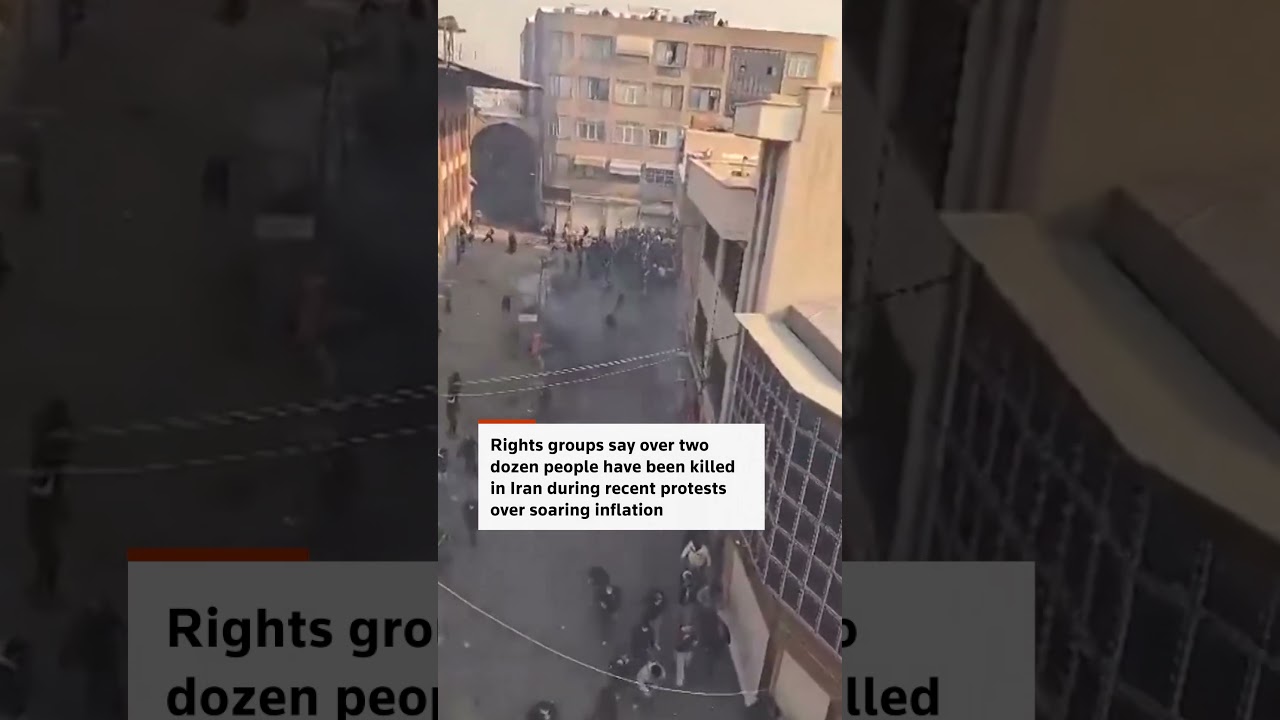
Additional, the Iranian people have again taken to the streets to air their grievances in opposition to harsh financial situations in addition to authorities corruption, mismanagement and hypocrisy, echoing comparable situations to Venezuela in recent times.
Lastly, President Donald Trump has returned his consideration to Iran. On Jan. 2, Trump warned Khamenei that if his forces violently suppress protesters, Iran can be “hit very hard” by the U.S.
Trump’s warning and present of solidarity will probably embolden protesters, which is able to virtually actually trigger Iran’s inside safety to crack down more durable, as has happened in the past. Such U.S. intervention might result in the overthrowing of the ayatollah, supposed or not. Moreover, Maduro’s destiny demonstrates that the Trump administration is keen to make use of army drive for that goal if deemed essential.
As an analyst of Middle East affairs focusing on Iran, I imagine that these situations place Khamenei’s regime below better menace immediately than maybe every other time in its 46-year historical past.
Rising threats, inside and exterior
If Khamenei hopes to outlive politically or mortally, I imagine he has three choices.
First, he might capitulate to U.S. demands to halt Iran’s nuclear enrichment program. Second, Iran might sprint toward a nuclear bomb. Lastly, he might flee.
In hopes of restoring deterrence, Khamenei might additionally proceed rebuilding his nation’s army capabilities, which have been considerably degraded throughout the June 2025 12-day war during which Israel and the U.S. aimed to destroy Iran’s nuclear functionality.
Israel is keen to stifle Iran’s reconstitution plans, protests are spreading and growing more intense, and Trump – by way of hostile rhetoric and offensive army motion – has put Khamenei on discover.
Khameini’s issues aren’t his alone. The revolutionary theocratic system of presidency that he leads is in danger of falling. And his army and inside safety equipment could not have the time or potential to handle its rising and interrelated inside and exterior threats concurrently.
There are two elementary elements analysts like me contemplate when assessing enemy threats: offensive functionality to inflict injury and hostile intentions to make use of these capabilities to hurt enemies.
Figuring out offensive functionality includes evaluating the standard of a rustic or group’s full arsenal – air, floor, maritime, cyber and area capabilities – and the way educated, disciplined, built-in and deadly their forces could be. Figuring out intentions includes evaluating if, when and below what situations offensive capabilities will probably be used to attain their objectives.
If states hope to outlive once they come below such strain, their protection technique ought to account for variations between their very own army functionality and the enemy’s, particularly if enemies intend to assault. Or states must persuade enemies to be much less hostile, if attainable.
Maduro’s mistake was his lack of ability to defend in opposition to a far superior U.S. army functionality whereas believing that U.S. leaders wouldn’t take away him from workplace. Maduro gambled and lost.
Dangerous decisions
Iran’s supreme chief faces an analogous conundrum: First, there isn’t any foreseeable path that enables Tehran to supply or purchase the army capabilities essential to discourage Israel or defeat america, except Iran develops a nuclear weapon.
And a long time of mutual hostility, the reminiscence of Iran’s once-clandestine nuclear weaponization program and recent Iranian lawmaker calls to develop nuclear bombs minimizes the prospect that U.S. leaders view Khamenei’s intentions as something however hostile.
However because the clear weaker celebration, it’s in Tehran’s curiosity to vary Trump’s thoughts about Tehran’s hostile intent. The best way to do this can be by abandoning nuclear enrichment.
By way of menace evaluation, the regime’s oft-repeated chants of “Dying to America” and “Dying to Israel” maybe have despatched an simply misinterpreted message: that Iran’s hostile leaders intend to destroy the U.S. and Israel. However they merely lack the potential, for now.
President Theodore Roosevelt famously mentioned “speak softly and carry a big stick; you will go far.” Immediately, he may say that Khamenei is unwise for talking with such vitriol contemplating the scale of Iran’s stick. America and Israel possess army capabilities far superior to Iran’s – as demonstrated by the 12-day conflict – however they didn’t then share the identical intent. Although each Israel and the U.S. operations shared the objective of neutralizing Iran’s nuclear functionality, Israel’s objectives have been extra broad and included focusing on senior Iranian leaders and destabilizing the regime.
To Khamenei’s momentary private and institutional fortune, Trump immediately called for a ceasefire following U.S. B-2 strikes on Iranian nuclear services, delineating america’ narrower goals that on the time didn’t embrace regime change in Iran.
However that was earlier than U.S. forces eliminated Maduro from Caracas and earlier than the outbreak of protests in Iran, each of which coincide with Israel’s signaling preparations for Round 2 in opposition to Iran.

Israel Defense Forces (IDF) / Handout/Anadolu via Getty Images)
Iran with out Khamenei?
Throughout Trump’s Dec. 29 press convention at Mar-a-Lago with Israeli Prime Minister Benjamin Netanyahu, he warned that the U.S. could “knock the hell” out of Iran if the nation reconstitutes its nuclear services.
That is separate from the ominuous warning that the U.S. might intervene on behalf of Iranian protesters; it will virtually actually differ in scale.
However, a possible U.S. intervention might embolden protesters and additional undermine and destabilize the Islamic Republic regime. Khamenei has predictably scoffed at and dismissed Trump’s warning.
I imagine this can be a severe mistake.
Secretary of State Marco Rubio warned on Jan. 3, 2025, that Khameini mustn’t “play video games” as Maduro did. Khamenei, Rubio mentioned, ought to take Trump’s warnings significantly. I agree.
If Iran refrains from violent crackdowns on protesters, there’s a likelihood that anti-government protestors overthrow the federal government. However the supreme chief’s possibilities of surviving a well-liked rebellion are most likely better than surviving an unbridled U.S. or Israeli army intent on ushering in a brand new – post-Islamic Republic – Iran.
In any other case, Khamenei has to handle superior U.S. and Israeli army functionality, shortly. However Iran is broke, and even if sanctions weren’t repeatedly strangling Iran economically, the nation might most likely by no means buy its option to army parity with the U.S. or Israel.
Alternatively, Iran might decide that it should transfer shortly to develop a nuclear weapon to mitigate U.S. and Israeli army capabilities and deter future aggression. Nevertheless, this can be very unlikely Iran might do that with out U.S. and Israeli intelligence discovering the undertaking, which might instantly set off an amazing army marketing campaign that will probably expedite regime change in Iran.
And like Maduro, the supreme chief is completely alone. None of Maduro’s closest companions – China, Russia, Cuba and even Iran – have been keen to struggle in his protection, regardless of weeks of forewarning and U.S. military buildup close to Venezuela.
Beneath these circumstances, it could be unattainable for Khamenei to handle overwhelming U.S. and Israeli army capabilities. He might, nonetheless, cut back the menace by doing what is important to make sure america’ goals for Iran stay slender and centered on the nuclear program, which can additionally maintain Israel at bay.
Nevertheless, Khamenei must reveal unprecedented restraint from cracking down violently on protesters and a willingness to surrender nuclear enrichment. Resulting from historic animosity and mistrust towards the U.S., each are unlikely, rising, I imagine, the likelihood of a forthcoming Iran with out Khamenei.