
For many of his 92 years, Wendell Berry farmed his Lane’s Touchdown homestead in Henry County, Kentucky, utilizing methods that embraced the land. He most well-liked draft horses to diesel-powered tractors and used crop rotation and manure fertilizer to naturally nurture his fields.
The widely revered poet-farmer, who wrote passionately about rural American life and people’ accountability to take care of the land, believed in training what he preached.
These beliefs have been rooted firmly in his Christian Baptist faith.
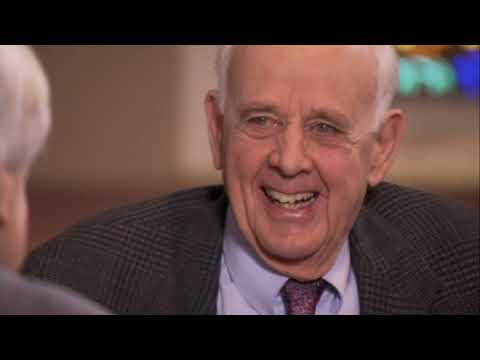
All through his life, Berry, who died on Aug. 31, 2026, was a number one advocate of environmental stewardship. You would possibly acknowledge his perception system in what’s often called creation care immediately.
It embraces a accountability to take care of the Earth and all its creatures. Berry more and more noticed that ethic violated by the industrialization of agriculture and ignored by a dominionist theology, preached by some outstanding American Christians, which holds that people have a God-given proper to use the Earth’s sources.
Biblical base for Berry’s environmental ethics
Berry’s environmental ethics had their foundation in Genesis, the primary guide of the Bible, which emphasizes that people are usually not the homeowners of the Earth however reasonably are referred to as to be caregivers and to have a tendency the planet. He wrote, “We’re allowed to make no exceptions – each particular person’s obligation towards creation is summed up in two words from Genesis 2:15: ‘Hold it.’”
In distinction, the dominionist view emphasizes Genesis 1:28, which has been interpreted by some to imply that people are to subdue the Earth and to ascertain Christian dominance.
Berry opposed the concept Christian scripture advocated for environmentally damaging practices comparable to mountaintop-removal coal mining, which led to the destruction of streams and forests in his native Kentucky. In 2011, he participated in a multiday sit-in protest of the mining practices, saying, “I intend to stay interested in it and involved so long as the Lord spares me.”

WendellBerryPoems/Instagram
I’m a scholar of American Christianity and have spent my profession researching and writing about how Christians observe their beliefs. I used to be within the viewers when Berry was awarded the 2013 American Academy of Faith’s Martin Marty honor for the Public Understanding of Religion. For over an hour I listened raptly, as did the remainder of the standing-room-only crowd, as he detailed his love for the land, neighborhood and his spouse, Tanya.
I additionally taught college students utilizing his guide “Jayber Crow,” about small-town residing, faith and neighborhood, in my honors course at a small liberal arts faculty within the Midwest. I returned to his work once I was researching modern-day agriculture in Iowa for my guide “Meatpacking America”.

Penguin Random House
I noticed how Berry’s beliefs that people have a accountability to take care of the Earth formed his critiques about “agripower,” which he considered as showing little regard for the fertility of the soil or the “well being, knowledge, thrift, or stewardship of the farming neighborhood.” His poems, fiction and nonfiction typically advocated for consuming less and living more communally.
These beliefs rested on his commitment to caring for God’s creation.
The thought of ‘sufficient’
Berry’s Christianity-infused agrarianism started in earnest within the Nineteen Seventies and helped popularize family-run farms, natural farming and farm-to-table consuming institutions.
The trendy creation care motion started as a part of a wider community of American social justice actions. It took form within the Nineteen Eighties and ’90s, particularly among those Christian evangelicals who learn the E book of Genesis as instructing people to care about all of God’s creations. As we speak, creation care is a broad Christian movement that requires environmental stewardship, repairing the hurt that people have carried out to the surroundings, and perception in a loving God who’s liable for the Earth’s creation.
Because the non secular research scholar Laurel Kerns has written, the Christian environmental motion that started within the Nineteen Eighties laid the theological groundwork for creation care. As we speak’s many chapters of creation care type part of a religious environmental movement that requires Christians to embrace stewardship, creation spirituality and ecojustice.
As he detailed his 1977 textual content “The Unsettling of America,” Berry was a fierce critic of agribusiness and American’s throwaway, consumeristic culture. He admired the Amish way of life, which forgoes fashionable conveniences for easy farm residing centered on God and household. He wrote, “It’s attainable, I feel, to say that it is a Christian agriculture, fashioned upon the understanding that it’s sinful for folks to misuse or destroy what they didn’t make. The Creation is a novel, irreplaceable reward, subsequently to be used with humility, respect, and skill.”
Berry inspired folks, whether or not or not they recognized as Christian or as non secular, to query know-how because the Amish do, to think about its affect on the surroundings in addition to on human lives, and to develop the idea of “sufficient.” He wished folks to be extra intentional and reflective of their ideas, phrases and actions.
All through his poems and different writing, Berry beseeched readers to concentrate on what they really want and never what they need or assume they want. “The idea of ‘enough’ is alien to capitalism, which respects no restrict,” he wrote.
Wendell Berry’s legacy in an AI backlash
Berry and his spouse and collaborator for 69 years, Tanya Amyx Berry, constructed a lifestyle and advocated for a way of life that went towards the grain of mainstream American and international tradition.
In over 50 books and many poems and talks, Berry helped lay the theological, moral and how-to groundwork for a creation care motion that unfold world wide. He persistently referred to as out the extractive, damaging human behaviors which have posed risks for the planet’s future.

Festival of Faiths, CC BY
How his legacy might be fulfilled stays to be seen, but when the rising cross-generational public aversion to AI data centers and different types of useful resource extraction are an indicator, it’s my perception that Wendell Berry’s legacy can have an extended and fruitful afterlife.
This text has been up to date to right the second Bible verse location to 1:28.