
Curious Kids is a collection for kids of all ages. In case you have a query you’d like an professional to reply, ship it to CuriousKidsUS@theconversation.com.
Why is Venus the most well liked planet, whereas Mercury is nearer to the Solar? – Sejal M., age 7, Bangalore, India
When the photo voltaic system had simply shaped, 4.5 billion years ago, Venus was in all probability a tropical paradise. Oceans of water seemingly lined its floor, and puffy clouds dotted its skies. At the moment, Mercury, the planet closest to the Solar, was undoubtedly the most well liked planet within the photo voltaic system.
However then the Solar grew brighter, and a collection of occasions referred to as a runaway greenhouse effect induced Venus’s floor temperature to soar nicely previous Mercury’s. To make sure, because the closest planet to the Solar, elements of Mercury are nonetheless extraordinarily sizzling. Its floor temperature on its sunlit facet is round 800 degrees Fahrenheit (430 degrees Celsius), sizzling sufficient to soften lead.
I’m a space scientist with a ardour for instructing physics and astronomy. I’ve seen Venus shine brightly within the western sky simply after sundown, and, on uncommon events, seen Mercury briefly seem as an “night star.”
What’s the greenhouse impact?
Venus isn’t the one planet that has skilled a greenhouse impact. Immediately, the identical phenomenon retains Earth’s floor liveable.
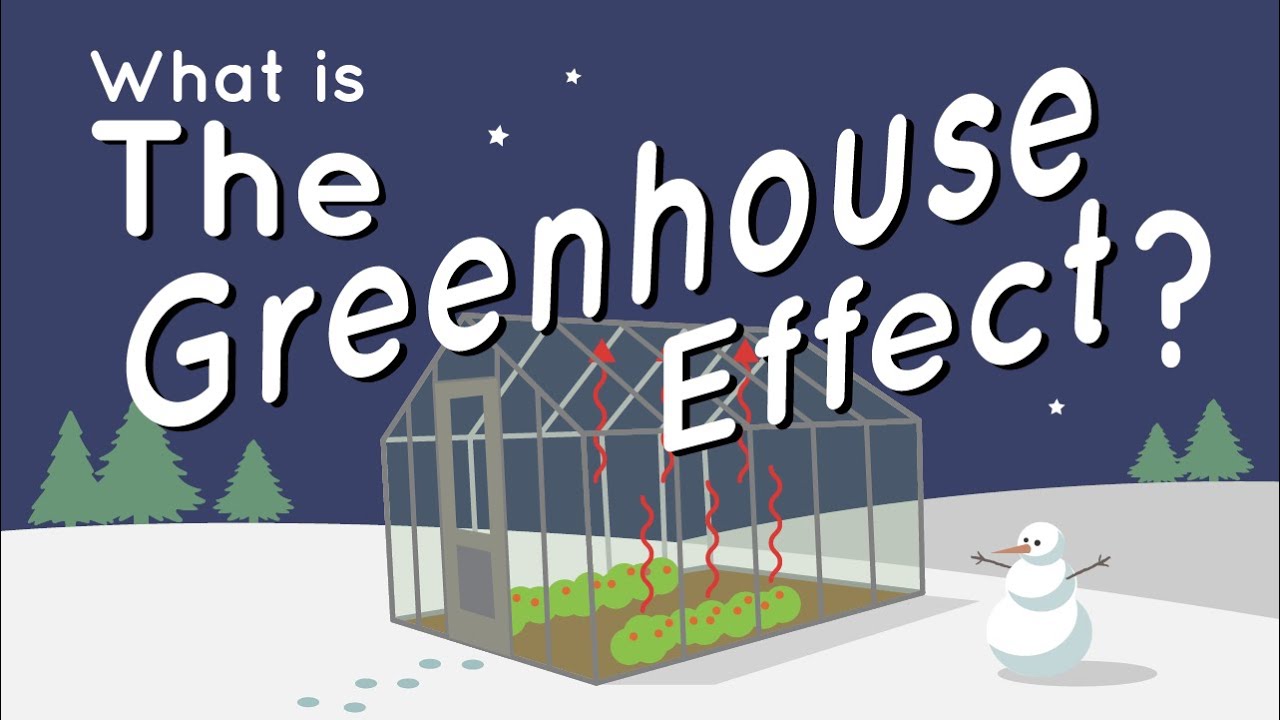
Heat objects emit electromagnetic radiation, or mild, as a result of their atoms and molecules are always vibrating. Earth’s floor is warmed by the Solar and offers off infrared light, which is invisible to your eyes. People and animals additionally glow in infrared, and many of the vitality launched by a campfire is infrared radiation. The warmer an object is, the extra infrared radiation it emits.
On a planet with out an environment, reminiscent of Mercury, this vitality escapes straight into area. Because of this, there may be an enormous difference in temperature between Mercury’s blistering sizzling sunlit facet and its evening facet, the place temperatures can drop to minus 290 levels F (minus 180 levels C).
On Earth, greenhouse gases within the environment, together with molecules of carbon dioxide, methane and water vapor, soak up and lure a few of this infrared radiation, appearing like a blanket across the planet and retaining the floor heat.
Earth’s common floor temperature is about 59 F (15 C). With out greenhouse gases, the temperature can be nearer to 0 F (minus 18 C), and Earth would resemble an enormous snowball. We positively want a reasonable greenhouse impact to make our planet liveable.

NASA/JPL-Caltech, CC BY
Diverging fates
However how might Venus, a planet that’s practically the identical measurement as Earth and that was as soon as made up of the identical issues, find yourself so completely different from our residence world? There are a number of clues to why Venus is such a sizzling, disagreeable planet in the present day.
Scientists agree that due to their comparable sizes and proximity to the Solar, Earth and Venus seemingly began out with comparable quantities of water and carbon dioxide. On Earth, many of the carbon dioxide is dissolved within the oceans or locked away in rocks, reminiscent of limestone. Venus might as soon as have saved carbon dioxide in an identical approach.
Scientific fashions of stars point out that the Solar has grown about 40% brighter because the early historical past of the photo voltaic system. Four billion years ago, it emitted only about 70% of the energy it does in the present day.
Scientists disagree about whether or not Venus ever had long-lived oceans. However proof suggests the planet possessed plenty of water early in its historical past. Because the Solar’s brightness elevated, an increasing number of water would have evaporated into the atmosphere. With out floor water to soak up and retailer carbon dioxide, practically all of this greenhouse gasoline collected within the environment.
This course of, in flip, would have induced much more evaporation and much more warming, a suggestions loop referred to as a runaway greenhouse impact. Immediately, carbon dioxide makes up about 96% of Venus’ environment, and its floor temperature is a virtually fixed 867 F (464 C) day or evening. Venus is now caught on this state, and its environment and floor temperature will stay like this for a really very long time.

NASA
Think about how thick Earth’s environment can be if all of the oceans evaporated and all of the carbon dioxide dissolved in them have been launched into the air. One thing very very similar to this occurred on Venus.
Because of this, the atmospheric stress at Venus’ floor is greater than 90 times greater than Earth’s atmospheric stress at sea stage. To expertise such a excessive stress on Earth, you would need to dive to a depth of about 3,000 toes (940 meters). That a lot stress is like having 5 elephants standing in your shoulders!
A runaway greenhouse impact on Earth?
You might have heard scientists warn that Earth might expertise a number of the similar processes affecting Venus if human-caused local weather change continues unchecked. World temperatures are rising as folks burn coal, oil and natural gas for industrial actions and transportation, releasing giant quantities of carbon dioxide into the environment. Carbon dioxide stays within the environment for a very long time. As an increasing number of accumulates there, it traps extra warmth, raising the temperature on the planet’s floor.
One other main greenhouse gasoline is methane. As Earth warms, an necessary supply of methane is thawing permafrost, the completely frozen floor discovered largely within the Arctic. When the icy ground thaws, it exposes natural matter that had been frozen for 1000’s of years, together with historic vegetation, mosses, and even the stays of woolly mammoths and different giant animals.
Micro organism can then decompose that matter, and as they do, they launch methane into the environment.
As Earth warms, extra permafrost melts, releasing much more methane and creating a vicious cycle. Earth might by no means attain the intense temperatures discovered on Venus in the present day. Nevertheless, our planet might change into a a lot much less snug place as temperatures rise.
Nevertheless, Earth’s floor temperature won’t ever attain wherever close to that of Venus in our lifetime, and Venus will stay the most well liked planet within the photo voltaic system – regardless of being farther from the Solar than Mercury.
Hey, curious children! Do you have got a query you’d like an professional to reply? Ask an grownup to ship your query to CuriousKidsUS@theconversation.com. Please inform us your identify, age and the town the place you reside.
And since curiosity has no age restrict – adults, tell us what you’re questioning, too. We gained’t be capable of reply each query, however we’ll do our greatest.