
The worldwide worth of oil continues to skyrocket as Iran’s missiles and drones hit vital infrastructure in Arab Gulf states. Billion-dollar American radar systems have also been targeted and destroyed throughout the Center East by Iran, seemingly degrading U.S. defenses.
U.S. navy presence close to Iran consists of dozens of locations and tens of thousands of troops in hurt’s means. This raises the query: If a missile is launched from Iran towards a U.S. navy base within the area, how do service members know in time to remain protected?
The US and its allies have constructed a layered system to observe the skies day and evening. This technique makes use of satellites in area, radar on the bottom, ships at sea and plane within the air. It additionally relies on well-trained navy members from U.S. Space Command who make fast choices with the information. As a former U.S. Air Pressure officer and now aerospace and national security law professor on the College of Mississippi, I’ve studied the huge community of alliances and methods that make this occur.
Collectively, these instruments kind a missile protection community that may spot hazard early and provides warnings. The quickest method to spot a missile is from area. U.S. satellites, just like the U.S. Space Force’s Space-Based Infrared System, circle excessive above Earth. These billion-dollar satellites, the crown jewels of missile protection, can spot the brilliant warmth from a missile launch nearly immediately.

Sepahnews/Handout/Anadolu Agency via Getty Images
When a missile is fired, it creates a powerful sufficient warmth sign to be seen in area. The satellites detect this warmth utilizing delicate, infrared sensors and ship an alert inside seconds. This early warning is important. It provides the navy on the bottom or at sea time to get protection methods prepared.
The warning sign from area is then acquired on the bottom by methods often called the U.S. Space Force’s Joint Tactical Ground Stations. The sign is shipped from area utilizing safe satellite tv for pc communications, acquired by these floor stations, after which shortly distributed to different elements of the missile protection community.
Radar to detect and observe missiles
However satellites can not do all the pieces to detect and observe missiles. They need assistance from methods on Earth. After a missile is launched, ground-based radars take over from the preliminary satellite tv for pc sign. Radars work by sending out radio waves. When these waves hit an object, like a missile, they bounce again. The radar then makes use of that info to trace the place the item is and the place it’s going all through its flight.
The U.S. makes use of each brief and long-range radars collectively. One highly effective, long-range radar is the AN/FPS-132 Upgraded Early Warning Radar. It could see missiles from over 3,000 miles (4,828 km) away and observe them as they journey. One other key system is the U.S. Army’s AN/TPY-2 Surveillance Transportable Radar. This radar has a variety of virtually 2,000 miles (3,219 km) and appears extra intently on the missile to offer extra details about the menace. TPY-2 methods usually sit proper subsequent to weapons methods that may destroy the missile to make sure the well timed relay of monitoring information.
In sum, satellites spot the launch and radars comply with the missile by means of the sky till protection methods destroy it.
Nevertheless, Iranian forces recently struck both a TPY-2 in Jordan and a FPS-132 in Qatar. These methods are costly and tough to shortly substitute. This has required the U.S. to move an additional TPY-2 from Korea to position it within the Center East.
U.S. missile protection monitoring was actually degraded by shedding these sources, however different radars are nonetheless a part of the community. For instance, the U.S. Area Pressure operates one other FPS-132 within the U.Okay., which may doubtlessly present radar help to the Center East.
Along with floor and space-based sensors, U.S. Navy ships carry highly effective radar methods as a part of their Aegis Combat System, often called the AN/SPY-1, which might present as much as 200 miles (322 km) of protection. Ships can sail nearer to areas the place threats could come from and assist fill gaps that land-based radars can not cowl.
U.S. Air Pressure plane additionally play a giant position. Planes just like the E-3 Sentry can watch giant areas utilizing radar from the sky. Drones such because the MQ-9 Reaper can keep within the air for lengthy durations and observe exercise beneath with radar and sensors. These transferring sensors assist the system keep versatile. If one space wants extra protection or is degraded, ships and plane can transfer there to fill in.
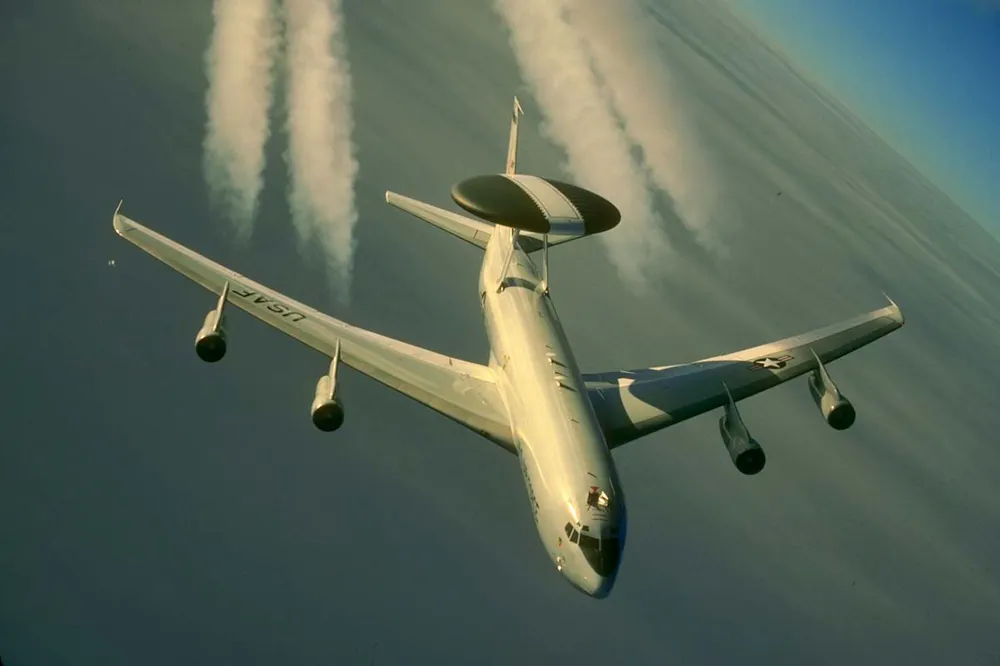
Robert Sullivan/Flickr
Why drones are tougher to catch
Drones require a distinct set of monitoring instruments and have confirmed harder to destroy than missiles from Iran. The legacy methods are merely higher suited to missiles than new drone know-how. To detect drones, the U.S. usually makes use of a number of instruments: radar; radio sign monitoring, which might choose up management alerts; and cameras and different sensors, which might see drones instantly.
Missiles are quick and sizzling, which makes them simpler to detect with the present methods. Iranian drones, such because the Shahed system, are totally different. Their warmth signature is usually minimal as a consequence of using gas-powered engines not simply detected by infrared sensors. With out this warmth signature, that preliminary warning cue is delayed, making it tough for radar to know what to trace.

AP Photo/Efrem Lukatsky
Drones are normally smaller and fly low to the bottom, making them exhausting to see on radar. They are often hidden by buildings or powerful to tell apart from birds and different objects. Some are product of supplies that don’t present up effectively on radar, reminiscent of fiberglass and plastic. Others transfer slowly, which might make them tougher to note or stand out.
Lots of Iran’s drones don’t present up on radio sign detection methods as a result of they can’t be remotely managed. These drones are programmed with GPS coordinates and navigate themselves to a goal.
A number of strategies
No single methodology works on a regular basis to defend towards drone assaults. As an alternative, these instruments work collectively to search out and observe drones. The U.S. and its allies proceed to enhance their methods to catch each missiles and drones. For instance, the U.S. is in discussions to buy acoustics sensors from Ukraine, which might hear drones coming after they can’t be seen utilizing different strategies.
New sensors, higher software program and quicker communication will all assist strengthen defenses. The objective is easy: Detect threats earlier, reply quicker and hit the goal quicker.