
Lively shootings symbolize a very small percentage of on-campus college violence.
However amongst those who do occur, there are patterns. And as regulation enforcement officers proceed to research the Dec. 13, 2025, Brown College capturing, similarities will be seen with different energetic shooter instances on faculty campuses that scholar James Densley has studied. “They have a tendency to occur inside a classroom, and there tends to be a number of victims,” Densley explains.
The Brown College tragedy, by which a shooter killed two students and injured nine more, marks the fourth deadly shooting at a U.S. college in 2025.
The Division of Training in Rhode Island, the place Brown College is situated, stated on Dec. 16 that it is urging local elementary and secondary faculties to overview security protocols.
Amy Lieberman, the training editor at The Dialog U.S., spoke with Densley about how faculties have been given what he describes as an “not possible mandate” to attempt to forestall shootings.
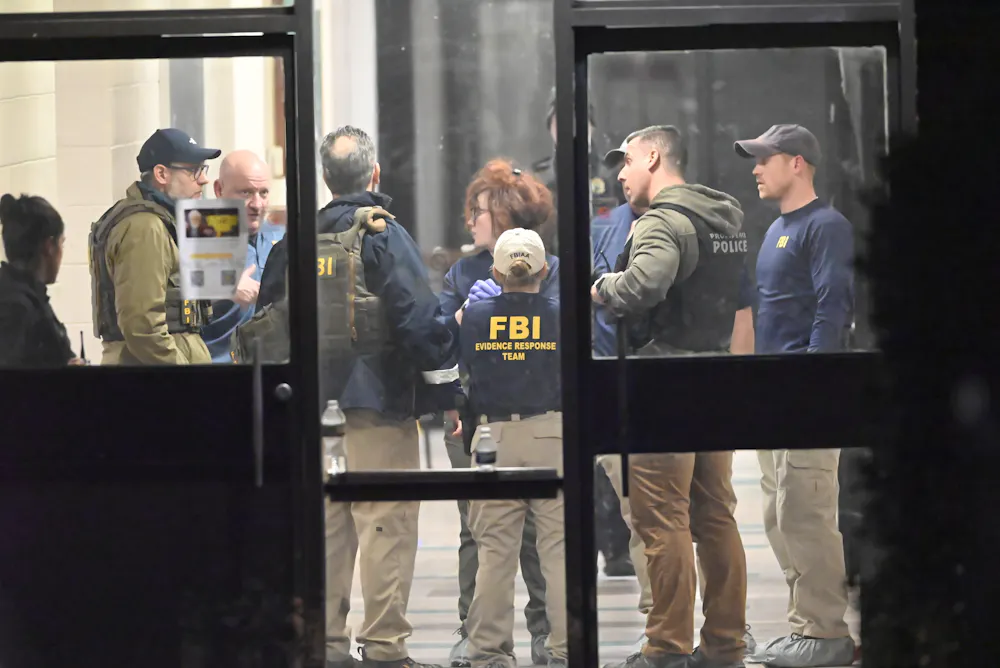
Kyle Mazza/Anadolu via Getty Images
What’s the general trajectory of faculty shootings over the previous few years?
K-12 school shootings seem like trending downward, no less than up to now two years. However we really noticed the most important jumps in this sort of violence within the three to 5 years main as much as 2024, which developments carefully with the broader rise in murder and violent crime we noticed within the pandemic period.
In 2025, there have been 230 school shooting incidents within the U.S. – nonetheless a staggeringly excessive quantity. This compares with 336 college shootings in 2024, 352 in 2023, 308 in 2022, and 257 in 2021.
How this pertains to a rise in faculties attempting to institute safety measures to stop shootings is an open query. But it surely’s true that many colleges are experimenting with sure solutions, like cameras, drones, AI menace detection, weapons scanners, panic apps and facial recognition, even when there may be solely weak or rising proof about how effectively they work.
Colleges are handled because the entrance line, as a result of the bigger, structural options are too troublesome to confront. It’s a lot simpler responsible faculties after a tragedy than to truly deal with firearm entry, grievance pathways – that means how an individual turns into a college shooter – and the opposite societal issues which are creating these tragedies.
How have faculties responded to the rise of faculty shootings in recent times?
Colleges are being requested to unravel a societal gun violence drawback that they didn’t create they usually can not management. Even the best-run college can not get rid of all dangers when causes accumulate exterior of their purview. These assaults are uncommon however catastrophic, they usually create an not possible mandate for faculties as a result of once they happen, faculties are advised it displays a failure of their preparation. Educators are anticipated to be lecturers, social staff, menace assessors and first responders. It normalizes concern and shifts the duty downward.
There’s a growing school safety industry that markets concern as a solvable, technical drawback. It guarantees sooner methods to detect weapons, for instance, however the evidence base for these merchandise is skinny, proprietary or nonexistent. One instance is an AI detection software program that mistook a bag of Doritos for a gun, leading to a big police response.
Colleges are pressured to purchase one thing from these firms to indicate they’re doing one thing. However a few of these techniques create false positives, and, extra importantly, they shift consideration away from human relationships. Know-how alone can not resolve grievances, exchange belief and create belonging, however most colleges are centered on know-how as a method of prevention.
How efficient are different prevention techniques faculties have put in place?
If a college shooter is an outsider attempting to assault the constructing, having a single level of entry, entry management or a number of locks on doorways creates time and area, that are important for delaying an attacker till regulation enforcement can arrive, thus mitigating casualties.
However the proof reveals that just about all college shooters are both current or former students on the college. They’re very acquainted with entry and exit factors, and they’re doubtlessly already contained in the constructing earlier than the college can act on a possible menace of violence.
So, what occurs if a college locks down, however you’re really locking the shooter in a room with their potential victims? What if college students are pressured to cover when it might be safer to run? What if in case you have a door that locks solely from the within and a pupil or workers member makes use of that room to bully or sexually assault one other pupil? We’re constructing faculties to guard in opposition to the uncommon occasions, however we’re not mitigating the extra frequent issues they face.
College students are being requested to follow stopping their very own deaths in energetic shooter drills and study in environments designed round worst-case eventualities. Usually, interpersonal violence and spillover of neighborhood violence, like gang-related shootings, are the most common form of school shooting. Most shootings at faculties happen in parking tons or at sports events, however we do little or no to arrange for these forms of eventualities.
Are there any advantages, then, to varsities having sure non-tech security measures in place, like ensuring each individual has an ID?
In fact, you don’t need strangers strolling round in a college constructing. The truth that somebody coming to the college has to get their ID scanned and put on a badge makes good sense, not simply to stop shootings however to additionally forestall theft and assaults and different dangers.
The paradox is that faculty shooters are usually kids already affiliated with the college, and when somebody walks in already firing, checkpoints and metallic detectors are ineffective. Traditionally, a number of mass shootings in K-12 schools have began exterior of the constructing then moved inside. The problem isn’t slipping previous limitations however overwhelming them in seconds with irresistible drive.

Ben Pennington/The Boston Globe via Getty Images
Absent coverage change, what’s the clearest technique to forestall college shootings, based on present proof?
Proof reveals that we frequently see signs of a crisis or withdrawal beforehand from college attackers. And that’s the reason school-based behavioral threat assessment and management is so necessary. It’s actually about noticing adjustments in habits and having the authority to intervene early. This isn’t about profiling folks or counting on regulation enforcement alone. It’s about having a structured, team-based course of for figuring out regarding habits, assessing danger and coordinating acceptable helps – equivalent to counseling – to stop hurt earlier than it happens. So typically in these instances, folks had a intestine feeling that one thing was off with a selected pupil, however they didn’t know what to share or who to share it with.
For many years we’ve invested much more in responding to highschool shootings as soon as they happen quite than in stopping them. You may lock doorways and run drills, however no college can develop into a fortress.
Attackers leak warning indicators upfront. Actual prevention is about creating human techniques that get upstream of this.